

History
Thirty to forty million years ago, the Paris Basin was a shallow, warm sea dotted with islands: Mont Valérien, Chaillot, Belleville, Montmartre, Bagneux, and the Meudon. This sea was primarily inhabited by nummulites from the foraminifera group, whose fossils later provided the city's building material. In addition, the lagoon fauna of Buttes-Montmartre, Buttes-Chaumont, and Ménilmontant produced gypsum, the second essential building material.
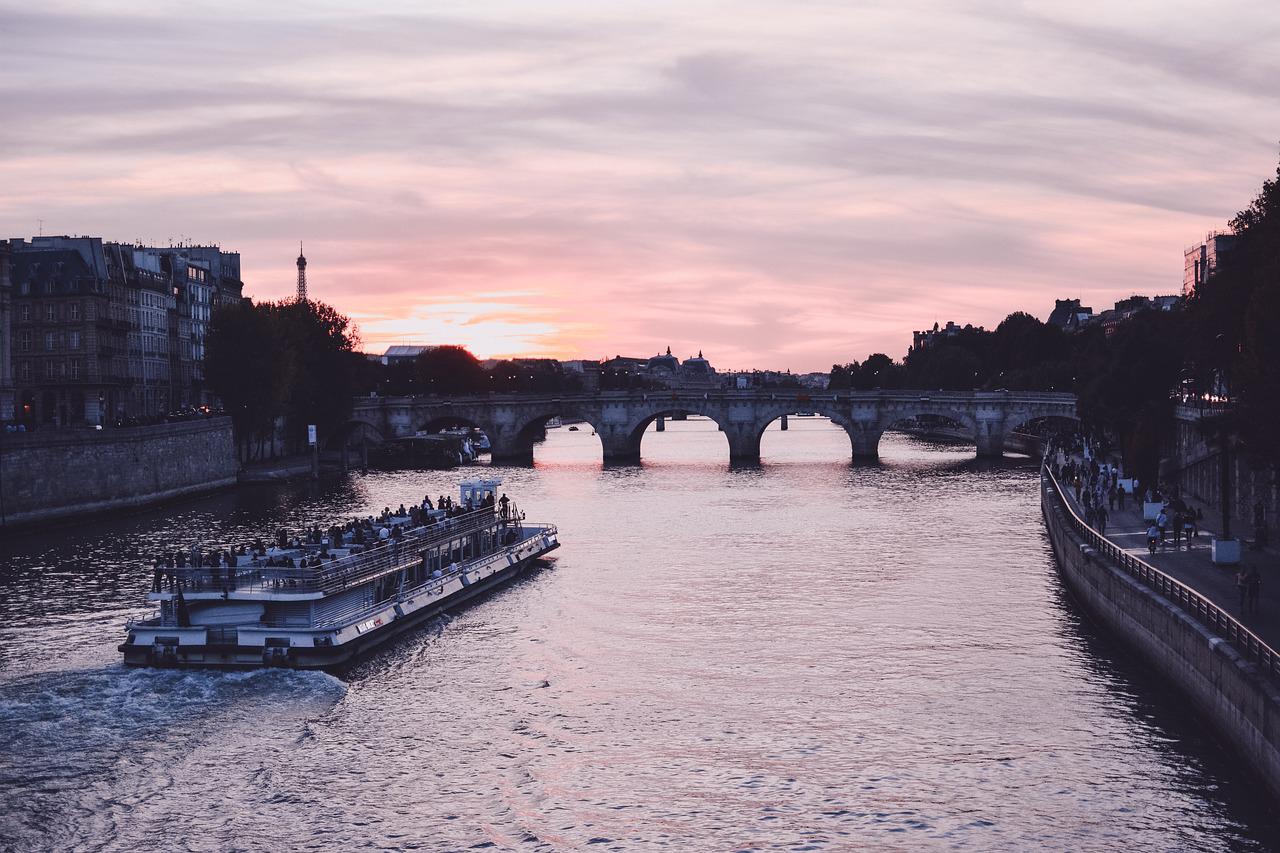
Later, as the large limestone plateau in what is now northeastern France eroded, the Seine River formed, with a catchment area of approximately 200 kilometers in diameter. At its lowest point, 28 meters above sea level, an archipelago formed, where people settled. No traces of this settlement remain, especially since the current settlement level is about six meters higher than the original level. Only at the western tip of the Île de la Cité, which at that time consisted of several small islands that were only later connected, is the level still the original one.
As an au pair in Paris